
Biodiversity Literacy: An Anti-Bubble Practice by Noe
The Biodiversity Literacy VIP offered me a way to burst the St. Andrews bubble by grounding myself in the plants and animals that connect this town to Scotland and the world. To start at the beginning, as a Californian, the appeal of going to the University of St. Andrews was the “abroad” experience. I imagined myself stepping into a new life filled with unfamiliar landscapes, diverse cultures, and new experiences. I pictured myself being able to call Scotland home. And then, I arrived in St. Andrews.
Despite living across the world, my experience was much smaller than I imagined. Don’t get me wrong —St. Andrews is incredible. It’s beautiful, with three beaches that never grow old and picturesque medieval buildings on every street. The three quaint streets are packed with everything you could want, and the student life even has enough events to keep the three streets entertaining. It’s charming, yet exciting. However, it is also a bubble.
I had come all the way to Scotland, an entire country of bustling cities, dramatic hills, and beautiful isles, only to discover that my own life played out within the bubble of a 10-minute walking radius. And the bubble wasn’t just spatial; its social aspects ensured that my experience was far from that of “moving to Scotland.” Unpacking my bags in Sallies Hall, I found that not only was my roommate American, but so were half of my neighbours. I did not travel halfway across the world just to surround myself with people from home. Shockingly, I also did not travel to Scotland to attend black-tie dinners with forced seating charts or spend ridiculous amounts of money on fashion shows. I wanted Scotland.
Perhaps the most shocking aspect of the bubble was the politics (or the lack thereof). I had to come to terms with the hard truth that St. Andrews is absurdly apolitical. Despite receiving a world-class education from brilliant professors, the ideas we discuss rarely leave the classroom or translate into action. It seems that political issues only matter once they appear within the bubble. In an effort to expand the bubble, I started leaving. Weekend trips to Glasgow and Edinburgh. Nights out in Dundee. Taking long walks on the Fife Coastal Path. While these efforts widened the frame, it still wasn’t enough. I didn’t just want to visit Scotland; I wanted to feel connected to it.
This desire is what led me to the Biodiversity Literacy VIP. Seeking out the animals and plants that make Scotland different and learning to identify them has burst the St. Andrews bubble. This is why I call biodiversity literacy an anti-bubble practice. While St. Andrews may not represent Scotland socially or the world politically, the ecosystems tie it to the broader Scottish landscape and global environmental systems.
While at home, I was able to identify local plant and animal species in the chaparral of the Santa Monica Mountains, but the Scottish flora and fauna were completely unfamiliar to me. The Biodiversity Literacy VIP has changed that for me. After enrolling in this module, the three streets of St. Andrews have become so much more than a collection of isolated pubs and gift stores; they have become part of a living ecosystem. I can now differentiate among the types of gulls flying around Market Street. Walking along the Lade Braes, I stop when I hear a chirp to identify its source. Not only has the VIP taught me how to identify dozens of plants and animals, but it has also opened my eyes to the world around me. As I walk around St. Andrews, I am constantly looking for signs of biodiversity. Along the Kinnessburn, I’ve learned to recognise hawthorn, ivy, holly, elder, and rowan. Hiking the Fife Coastal Path now takes twice as long because I stop every few minutes to learn a new plant name. This art of noticing has added so much to this small and isolated town.
Plant identification does not require taking a course or studying for hours; it can begin with downloading an app. I use PlantNet and Seek to quickly take photos of plants as I walk around, and the app does the rest. Still, picking up this practice can be challenging. To make it easier, I’ve created the identification guides below for some of the most common plant species in St. Andrews. These plants are ones that I’d walked past countless times without ever taking the time to learn to identify. I hope these identification guides will spark curiosity about the thousands of other plants you pass every day in St. Andrews and around the world.


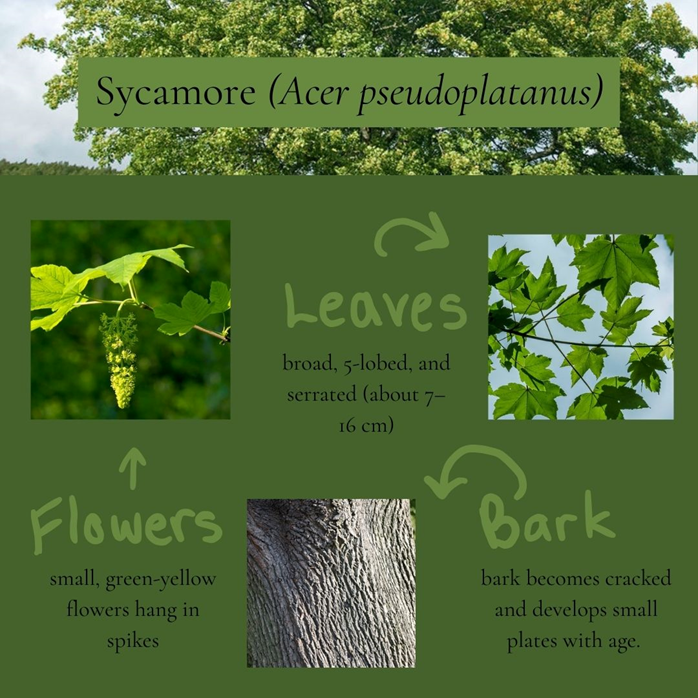

Biodiversity literacy helps pull you outside of the St. Andrews bubble by allowing you to see the bigger picture. The more species I learned to identify, the more St. Andrews stopped feeling like a backdrop for student life and began to feel like a real ecological place. I began forging a connection with Scotland as I started to be able to identify native Scottish plants wherever I went.
Not only does biodiversity literacy break down the geographical bubble separating St. Andrews from the rest of Scotland, it also cultivates a kind of political and global awareness that the bubble rarely allows. Because nature does permeate the St Andrews bubble, paying attention to it is one of the few ways political issues can actually enter students’ field of view. The kind of perceptiveness that biodiversity literacy requires is a catalyst: it nudges you from recognition to care, and from care to action. As biologist and historian of science Gould put it, “We cannot win this battle to save species and environments without forging an emotional bond between ourselves and nature as well—for we will not fight to save what we do not love.” In other words, biodiversity literacy naturally leads to environmental responsibility. After enrolling in the VIP, I began to notice parts of the university that lacked biodiversity, and I could envision ways to improve it. Caring about the environment here leads directly to caring about the health of ecosystems everywhere. Biodiversity literacy is an anti-bubble practice because it dissolves the separation between the university and its surroundings, reconnecting St. Andrews to Scotland and Scotland to the wider world. So, if you’re looking for a way to pop the St. Andrews bubble, try biodiversity literacy, and watch the bubble expand.


Comments